A desk with a stopwatch and a blank tally sheet in front of shelves of shoe boxes and a small pile of game cases, with a phone on a tripod ready to stream

We counted our stock before our first eBay Live show

We are about to start selling on eBay Live. Before the first show we did something we should have done before we started planning. We counted what we have. What the count showed Our store had 414 live listings on the day we counted, covering 426 units with a combined asking value of about $111,800. Group Units Asking value Sneakers 300 $87,721 Video games 69 $2,863 Consoles and controllers 7 $6,999 LEGO 12 $4,825 Tech 9 $4,276 Everything else 29 $5,132 Sneakers are 70% of the units and 78% of the value. Almost all of them are priced at $150 or more. ...

November 15, 2026
A magnifying glass over a struck-through $213 price tag among sneaker boxes: eBay sold listings, is it the same item?

eBay Sold Listings: How to Read Them Before You Price

To see eBay sold listings in Australia, search for your item, then tick “Sold items” under “Show only” in the filters (on the app: Filter → Show only → Sold items). eBay shows completed sales from roughly the last 90 days, with sold prices in green. That’s the best free pricing data a reseller has. It’s also easy to misread: the median of a sold search often describes a different item, a different condition or a different total price from the one you’re about to list. ...

October 1, 2026
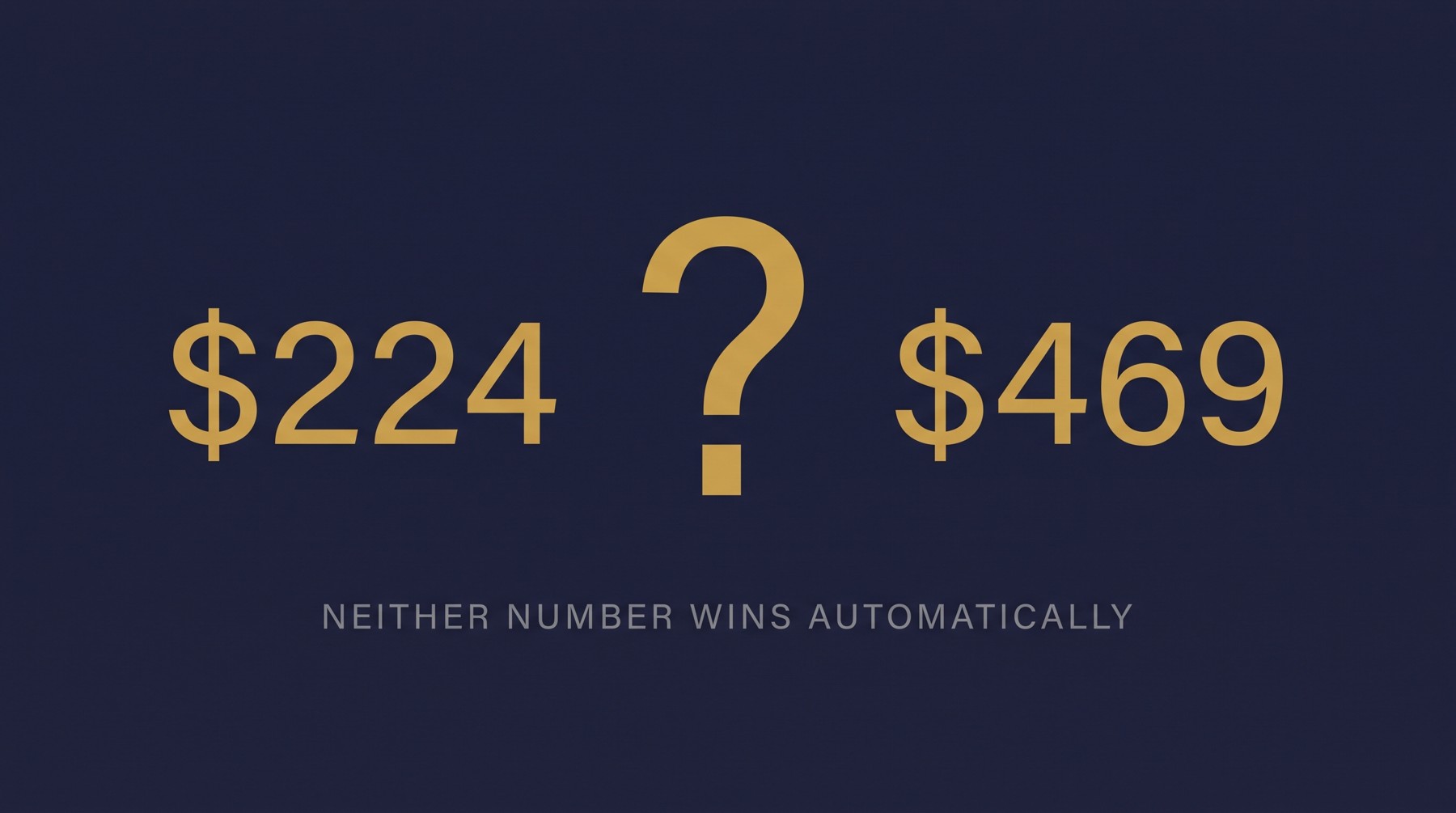
Two prices, $224 and $469, separated by a question mark, captioned neither number wins automatically

Use your own sold history alongside market comparisons

Correction — 19 September 2026: The first version said our sold history beat every comparison tool, proved a pricing advantage and prevented a specific loss. The examples do not establish those conclusions. This version separates reported comparisons from verified outcomes and treats store history as one source of evidence. We run Still In The Box AU and are building TurnGoods around the decisions that come with reselling. When a market comparison differs from a price in our own sales history, the useful next step is to investigate the difference. ...

September 19, 2026

Auction or fixed price: what 4,989 live listings showed

Correction — 19 September 2026: The original article said this snapshot ruled out late bidding. It does not. We compared different auctions at one point in time, not the same auctions through to completion. We have removed that conclusion and corrected the explanation of bid counts. The original snapshot figures below are retained; this is not a new capture or a completed-sales study. A consignor asks whether to auction an item rather than list it at a fixed price. It is a reasonable question. An auction has a deadline, and a deadline creates urgency that a Buy It Now listing does not. ...

September 16, 2026

Ten consignment software features to test with your own workflow

Reviewed and revised — 12 September 2026. This article has been updated to correct unsupported claims and reflect the current enquiry-based offer. Its original publication date and URL are retained. A feature list is a starting point. The stronger test is whether a system can handle one ordinary item and one awkward exception from intake to settlement. Requirement A useful acceptance test Inventory Find an item by ID and physical location; distinguish available, held and sold quantities. Agreements Retrieve the exact terms accepted for that item. Pricing evidence Inspect comparables, uncertainty and the reason for a price decision. Marketplace workflow Distinguish drafts, published listings, detected sales and confirmed delisting. Commission Reproduce the calculation under a flat rate and an agreed item exception. Payouts Reconcile amounts due, held, adjusted and actually paid. Consignor access Show only the authorised consignor’s records. Reporting Export traceable transactions and reversals for the accountant. Staff access Restrict sensitive actions and retain an audit history. Recovery Restore a backup and resolve a failed import without duplicating sales. Add the difficult cases Try a partial refund, a cancelled order, a bundle, an unsold return and a changed commission agreement. Ask what happens when an integration stops responding. A successful happy-path demo is not enough to establish reliable operation. ...

June 2, 2026

Comparing marketplace fees without mixing countries or currencies

Reviewed and revised — 12 September 2026. This article has been updated to correct unsupported claims and reflect the current enquiry-based offer. Its original publication date and URL are retained. A fee comparison is only useful when the seller is eligible for the market and the inputs use the right currency. A US fixed charge cannot be relabelled AUD, and a buyer fee is not automatically a seller deduction. ...

May 23, 2026

Managing different commission rates without rewriting history

Reviewed and revised — 12 September 2026. This article has been updated to correct unsupported claims and reflect the current enquiry-based offer. Its original publication date and URL are retained. Different consignors may agree different terms. The important part is not how many rates you support, but whether a later payout can be reproduced from the terms that applied to that item. Define the basis Record whether the percentage applies to the gross sale, a tax-exclusive amount or an amount after specified costs. Clarify fixed charges, minimum commissions and how refunds affect the calculation. Avoid describing a rate as “30%” without defining what it is applied to. ...

May 22, 2026

Cross-listing and auto-delist: what to verify before relying on it

Reviewed and revised — 12 September 2026. This article has been updated to correct unsupported claims and reflect the current enquiry-based offer. Its original publication date and URL are retained. Cross-listing a unique item creates a simple operational risk: more than one buyer can purchase the same stock before every listing is ended. Automatic delisting can help only when the whole chain works. Separate three capabilities Step Evidence to request Publish A real listing ID on the destination marketplace, not merely a generated draft. Detect a sale The source event or reconciliation record and the time it reached inventory. End other listings A confirmed result for each destination, plus an exception if it failed. A CSV import is not a live sale feed. Creating a marketplace-ready draft is not publishing. A central “sold” label does not establish that another marketplace accepted an end-listing request. ...

May 21, 2026

What to record in a consignment intake agreement

Reviewed and revised — 12 September 2026. This article has been updated to correct unsupported claims and reflect the current enquiry-based offer. Its original publication date and URL are retained. A consignment agreement should make the arrangement understandable before the store accepts the item. A digital signature cannot repair unclear commercial terms. Identify the parties and goods Record the store and consignor details, item ID, description, condition, accessories and intake photographs. Include the consignor’s ownership declaration and a process for questions about authenticity or title. Keep a copy of the accepted agreement linked to the item. ...

May 20, 2026

What a useful consignor statement should contain

Reviewed and revised — 12 September 2026. This article has been updated to correct unsupported claims and reflect the current enquiry-based offer. Its original publication date and URL are retained. A consignor statement should answer three questions: what happened to my items, how was my share calculated and what has been paid? Define the period and status Show the reporting dates, preparation date and whether the statement is provisional or final. Separate unsold stock, completed transactions, unresolved returns and payments. A sale recorded near month-end may need later adjustment. ...

May 7, 2026