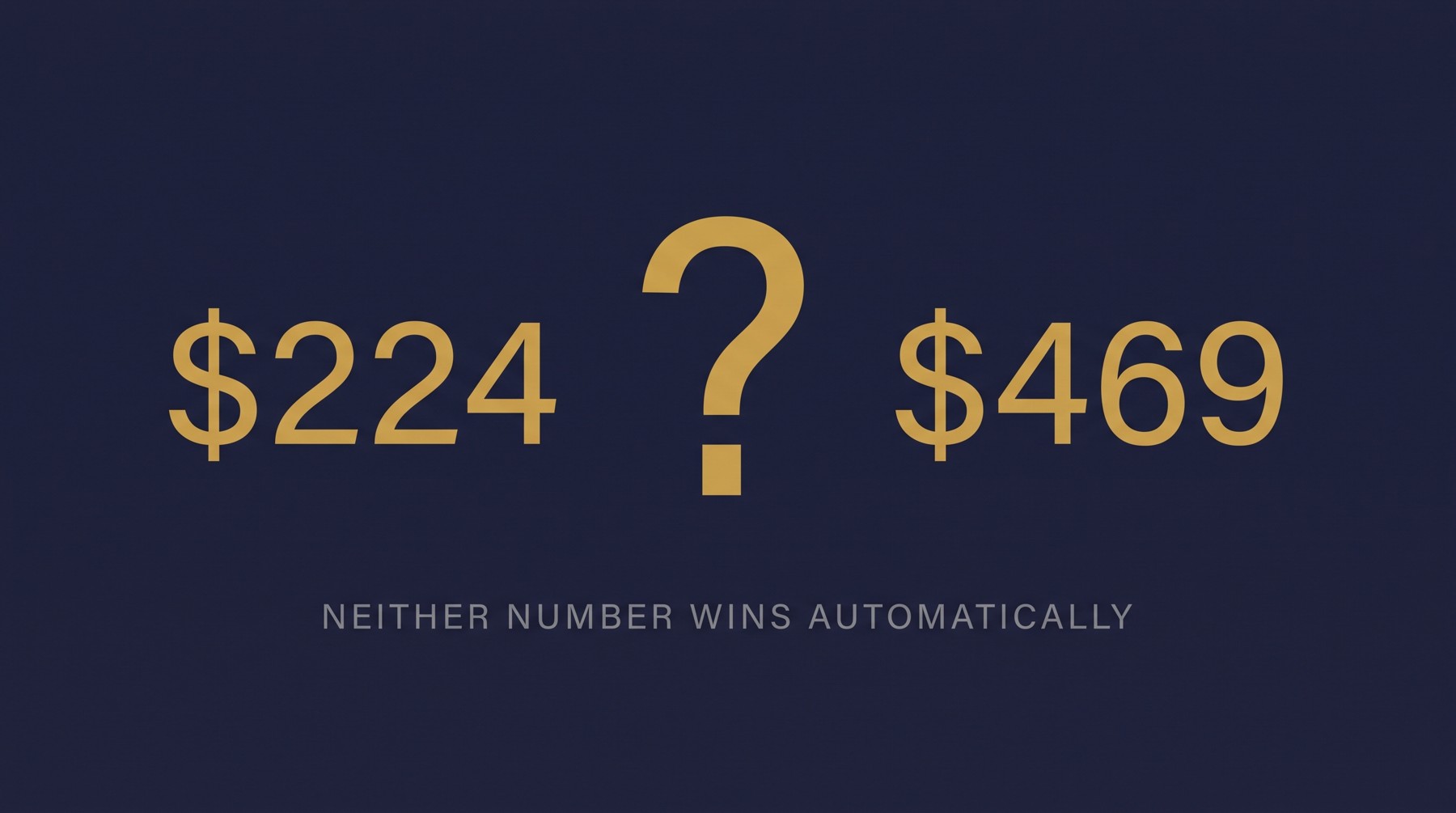
Two prices, $224 and $469, separated by a question mark, captioned neither number wins automatically

Use your own sold history alongside market comparisons

Correction — 19 September 2026: The first version said our sold history beat every comparison tool, proved a pricing advantage and prevented a specific loss. The examples do not establish those conclusions. This version separates reported comparisons from verified outcomes and treats store history as one source of evidence. We run Still In The Box AU and are building TurnGoods around the decisions that come with reselling. When a market comparison differs from a price in our own sales history, the useful next step is to investigate the difference. ...

September 19, 2026

Auction or fixed price: what 4,989 live listings showed

Correction — 19 September 2026: The original article said this snapshot ruled out late bidding. It does not. We compared different auctions at one point in time, not the same auctions through to completion. We have removed that conclusion and corrected the explanation of bid counts. The original snapshot figures below are retained; this is not a new capture or a completed-sales study. A consignor asks whether to auction an item rather than list it at a fixed price. It is a reasonable question. An auction has a deadline, and a deadline creates urgency that a Buy It Now listing does not. ...

September 16, 2026

What our repricing comparison actually showed

Correction — 12 September 2026: We have corrected the retained-sale count from four to three and the comparison denominator from 132 to 103. The earlier “6× lift” claim is withdrawn. These groups were neither randomised nor fully matched, so the comparison does not establish a causal effect. The original URL and publication date are retained. We repriced eight listings in our own store and wanted to know whether it had helped. ...

September 5, 2026

Old stock was only 4% of our asking value

Correction — 12 September 2026: This article now uses the saved 11 September inventory snapshot. We have withdrawn the earlier claim that buyers pay the original asking price: the calculation used current recorded asks, which cannot establish historical negotiation discounts. The original URL and publication date are retained. The oldest listings in a store are easy to notice. They are the ones you recognise every time you scroll past them, and the ones you keep meaning to clear. ...

September 5, 2026

How to review older listings without guessing at the cause

Correction — 12 September 2026: The original article counted a cancelled order among four sales and attributed outcomes to repricing. The corrected measure is three retained-sale listings out of eight. We have removed the unsupported revenue and causal claims, and the suggestion that traffic alone identifies a price or photography fault. The original URL and publication date are retained. As a store grows, remembering which listings need another look becomes harder. An older listing can be a useful starting point, but its age does not tell you why it has not sold or whether a discount would help. ...

September 4, 2026

AI pricing for secondhand items: how to check a recommendation

Reviewed and revised — 12 September 2026. This article has been updated to correct unsupported claims and reflect the current enquiry-based offer. Its original publication date and URL are retained. A price suggestion is useful when you can inspect the evidence behind it. A confident number without the correct model, condition or market is a poor basis for listing a secondhand item. Start with the exact item Record the model, variant, size, included accessories, working condition and visible faults. A sealed copy, an opened complete copy and a damaged incomplete copy are different offers. Avoid combining them simply because their titles match. ...

April 26, 2026

A practical pricing process for Australian resellers

Reviewed and revised — 12 September 2026. This article has been updated to correct unsupported claims and reflect the current enquiry-based offer. Its original publication date and URL are retained. A useful asking price starts with the item and the evidence, then accounts for the seller’s constraints. It should not come from a universal percentage discount off another listing. Identify comparable evidence Match model, variant, condition, completeness and market. Separate completed sales from current asks. Record dates and shipping treatment, and exclude bundles or uncertain matches from a simple comparison unless you can explain the adjustment. ...

April 17, 2026

Selling on consignment in Australia: how it works and what you keep

Reviewed and expanded — 13 September 2026. This guide explains the item owner’s decision. Its original publication date and URL are retained. Store operators can use the separate consignment workflow guide . Selling on consignment means placing an item with a seller who sells it on your behalf under an agreed arrangement. The seller deducts the agreed commission and costs from the sale proceeds. It differs from an outright purchase, where a buyer agrees to buy the item from you rather than waiting to sell it for you. ...

April 17, 2026